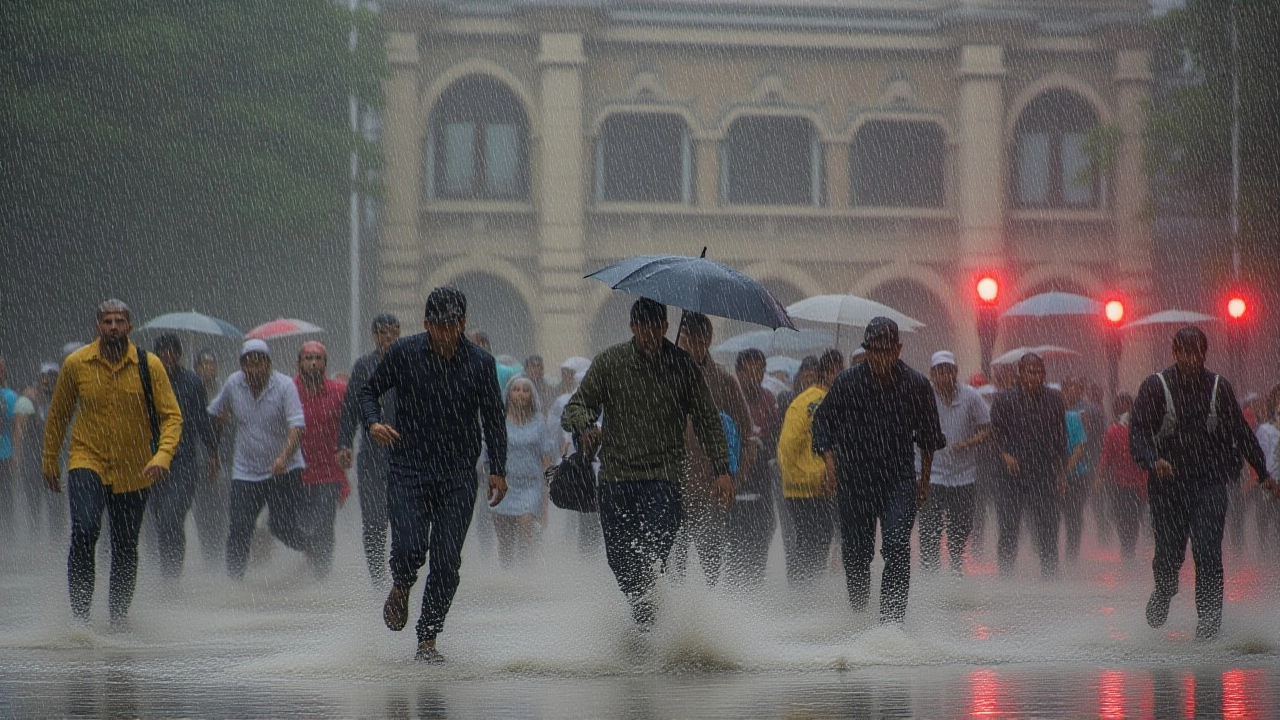
When Aaj Tak, a leading Hindi news platform under the India Today Group, published its weather update on June 19, 2026, the headline asked a question millions of Indians were asking themselves: "Will it rain tomorrow or will you have to bear the heat?" The answer for many, especially in the north, was unfortunately the latter. While parts of eastern India saw the monsoon advance, residents of New Delhi and surrounding regions faced a brutal stretch of high temperatures and dust storms.
The twist is that while the southwest monsoon had officially arrived over Kerala weeks ago, its progress across the rest of the country has been uneven. As of mid-June 2026, the rainfall deficit stood at 12%, up from 9% just two days prior. This isn't just a statistic; it means delayed relief for farmers and uncomfortable living conditions for urban dwellers.
The Capital’s Scorching Reality
In New Delhi, the situation on June 19 was stark. Temperatures hit 38.3°C (100.9°F), accompanied by dust storms that turned the sky a hazy orange. According to data from Navbharat Times, the air quality remained poor due to these dusty winds. Experts suggest that the monsoon might not reach the capital until early July 2026. That’s a significant delay compared to historical averages, where the rains usually arrive by late June.
Here’s the thing: this delay isn’t isolated to Delhi. The entire National Capital Region (NCR), including parts of Haryana and western Uttar Pradesh, is stuck in a pre-monsoon heat trap. Western disturbances, which usually bring some relief, have been weak, leaving the region dry and hot.
Where the Rain Is Actually Falling
But wait, it’s not all dry everywhere. In eastern India, the monsoon is making steady progress. Between June 18 and 19, the rains advanced into Bihar, West Bengal, Jharkhand, Odisha, and Chhattisgarh. If you’re in these states, you’re likely dealing with wet roads and humid air rather than scorching sun.
Even in Rajasthan, there were signs of change. Data from aqi.in showed light rainfall of 0.12 mm in Jaipur on the afternoon of June 19. While negligible in volume, this indicates that atmospheric moisture is increasing, even if it hasn’t translated into substantial downpours yet.
Expert Analysis: What the Models Say
Skymet Weather, a private forecasting agency based in Gurugram, provided a detailed breakdown of the coming days. Their analysis highlights a clear divide in the country’s weather patterns:
- Punjab and Haryana: Expect severe heat to continue through June 20. Rainfall activity may begin around June 21 in districts like Pathankot, Gurdaspur, and Chandigarh as the monsoon trough shifts northward.
- Himalayan Foothills: Good rainfall is predicted between June 20 and 22 in Jammu & Kashmir, Himachal Pradesh, and Uttarakhand. This interaction between the monsoon and western disturbances could trigger heavy showers.
- Uttar Pradesh: The terai regions near Nepal are expected to see intense rain from June 21 to 23. However, western UP remains in the heat zone.
- Gujarat: Residents here may face a longer wait. The monsoon’s entry into Gujarat appears delayed, adding to concerns about agricultural planning.
The details are still evolving, but the consensus among meteorologists is that the next few days will be critical. If the monsoon fails to pick up pace by June 22, the heatwave in northern India could intensify further.
Impact on Daily Life and Agriculture
For the average citizen, this weather split creates a logistical headache. In cities like Lucknow, AccuWeather reported a "RealFeel" temperature of 113°F (45°C) with only a 2% chance of rain. Such extreme heat poses health risks, particularly for outdoor workers and the elderly. Hospitals in NCR have already reported an uptick in heatstroke cases.
Agriculturally, the delay is concerning. Farmers in Punjab and Haryana rely on timely monsoon rains for crop sowing. A week-long delay can impact yield potential for Rabi crops and affect soil moisture levels crucial for Kharif planting. Meanwhile, in central India, Madhya Pradesh reported no rain on June 19 or 20, with temperatures hovering around 37-39°C. The lack of precipitation here threatens water reserves already strained by previous years’ deficits.
What’s Next?
Over the next 72 hours, watch for the monsoon line to push into the Gangetic plains. If models hold true, relief should start arriving in Uttarakhand and eastern UP by June 21. For Delhi and Punjab, patience is key—relief may come by late June, but don’t rule out a slip into early July.
Authorities are advising citizens to stay hydrated, avoid peak sun hours (12 PM to 4 PM), and monitor local air quality indices, especially during dust storm events. As the climate becomes more unpredictable, understanding these localized forecasts is essential for safety and planning.
Frequently Asked Questions
When will the monsoon reach New Delhi?
Current forecasts from Aaj Tak and IMD suggest the monsoon may reach New Delhi by early July 2026. This is later than the usual late-June arrival, meaning residents should prepare for continued heat and dust storms throughout the rest of June.
Is it raining in any part of India right now?
Yes, the monsoon has advanced into eastern states like Bihar, West Bengal, Jharkhand, Odisha, and Chhattisgarh. Additionally, light drizzles were recorded in Jaipur, Rajasthan, though most of western and northern India remains dry.
How severe is the heatwave in Punjab and Haryana?
The heatwave is classified as severe, with temperatures expected to remain above normal until at least June 21. Skymet Weather predicts no significant rainfall relief for these regions until the monsoon trough shifts northward towards the end of the month.
Why is the monsoon delayed this year?
The delay is attributed to weak western disturbances and a slower-than-average progression of the monsoon trough. The national rainfall deficit increased from 9% to 12% in mid-June, indicating a temporary weakening of the system before it gains momentum again.